Warranty: meaning and examples
A warranty is a manufacturer's promise to repair or replace defective parts for a set time or distance, whichever comes first. Many warranties expect the owner to follow the maker's service schedule.
How it works
A warranty is the maker's promise to fix or replace parts that fail because of a defect, for a stated time or distance. It usually ends at whichever limit you reach first.
Many warranties expect you to service the vehicle as the maker says. Bajaj's Pulsar 150 manual, for example, says that using all the free and paid services and replacing the mandatory periodic parts keeps the warranty valid.
If you ever need to claim, the maker or dealer may ask for proof. A dated service history with receipts is the simplest way to show it.
A service schedule tied to warranty
Bajaj's manual for the BS VI Pulsar 150 lists three free services and then paid services, and states the warranty. Our Bajaj Pulsar 150 schedule page summarises that source.
How to track it in Loggy
A dated service history with receipts is the evidence of that schedule being followed. Log each service with its receipt, and export the PDF if a claim needs proof.
- Find the maker's schedule for your exact model.
- Log each service with the date, reading and receipt.
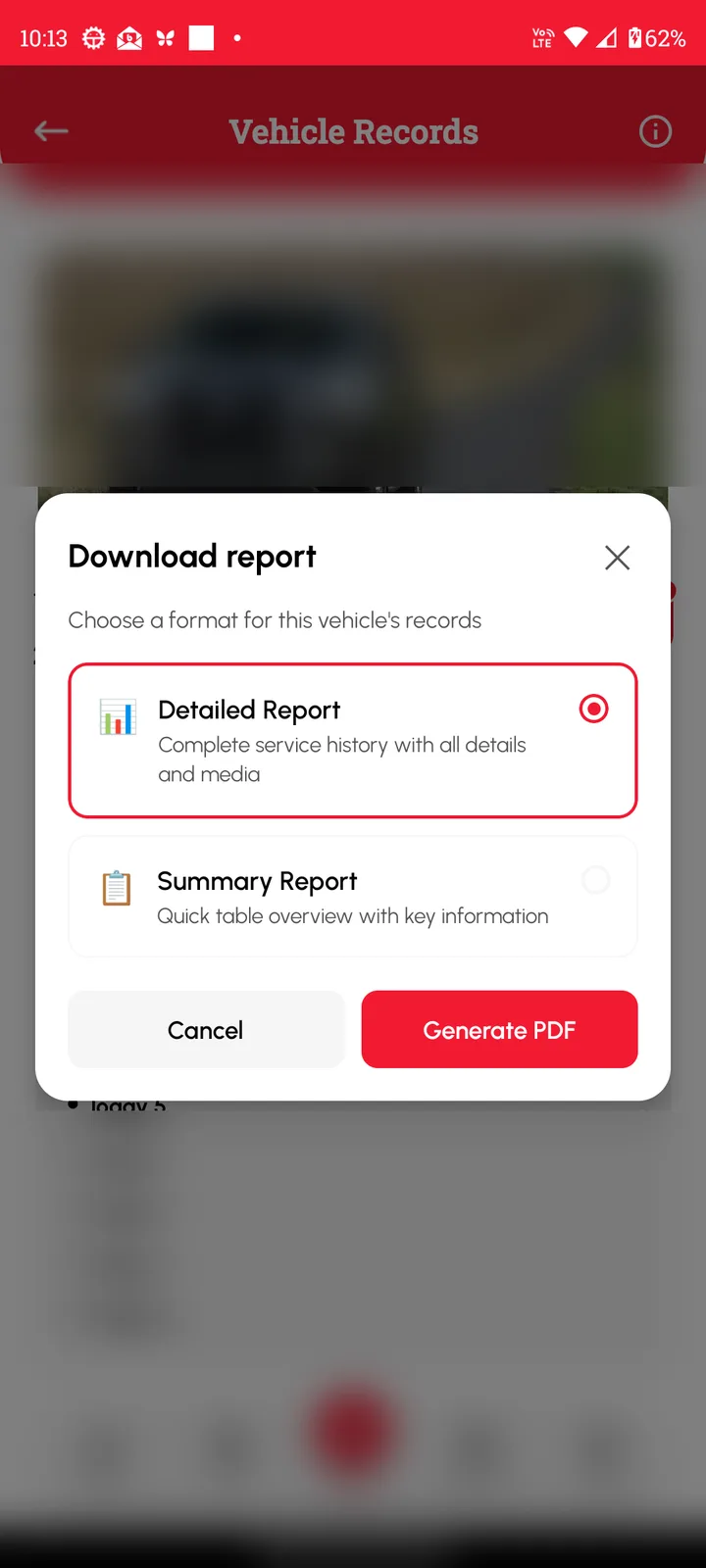
- Export the PDF history if a warranty claim asks for proof.
Loggy is a free maintenance logbook app for iOS and Android. The free plan has unlimited vehicles, reminders, PDF export and vehicle transfer, and no ads.


Frequently asked questions
Does skipping a service void my warranty?
It depends on the maker and the country. Read your warranty terms, and keep up the schedule and records.
What proof do I need?
Usually dated service records and receipts. Check your warranty document.
Is a warranty the same as insurance?
No. Insurance covers loss or damage from events. A warranty covers defects in the product.