Diagnostic trouble code: meaning and examples
A diagnostic trouble code is a short code a vehicle's onboard computer stores when it detects a problem, such as P0301 for a misfire in cylinder 1. A scan tool plugged into the vehicle's diagnostic port reads it.
How it works
When a vehicle's computer notices something outside its normal range, such as a misfire or a faulty sensor, it stores a diagnostic trouble code and often lights the dashboard warning lamp. A scan tool connected to the diagnostic port reads the stored codes.
A code points to where the problem was detected. It is a starting point for finding the cause, not a full diagnosis. P0301, for example, means a misfire was detected in cylinder 1. The cause could be a plug, a coil, a fuel or a mechanical problem.
Writing down the code, the date and what you did next makes a repeat problem much easier to deal with.
Recording a code
Illustration: a workshop reads P0301 on a car, replaces the spark plug and clears the code. Your fault title could be "Warning light, code P0301", with the repair added as a log entry and the receipt attached.
How to track it in Loggy
Loggy does not read codes from the vehicle. Read the code with a scan tool, then add it as a fault or in a log entry's notes, with the date and what was done about it.
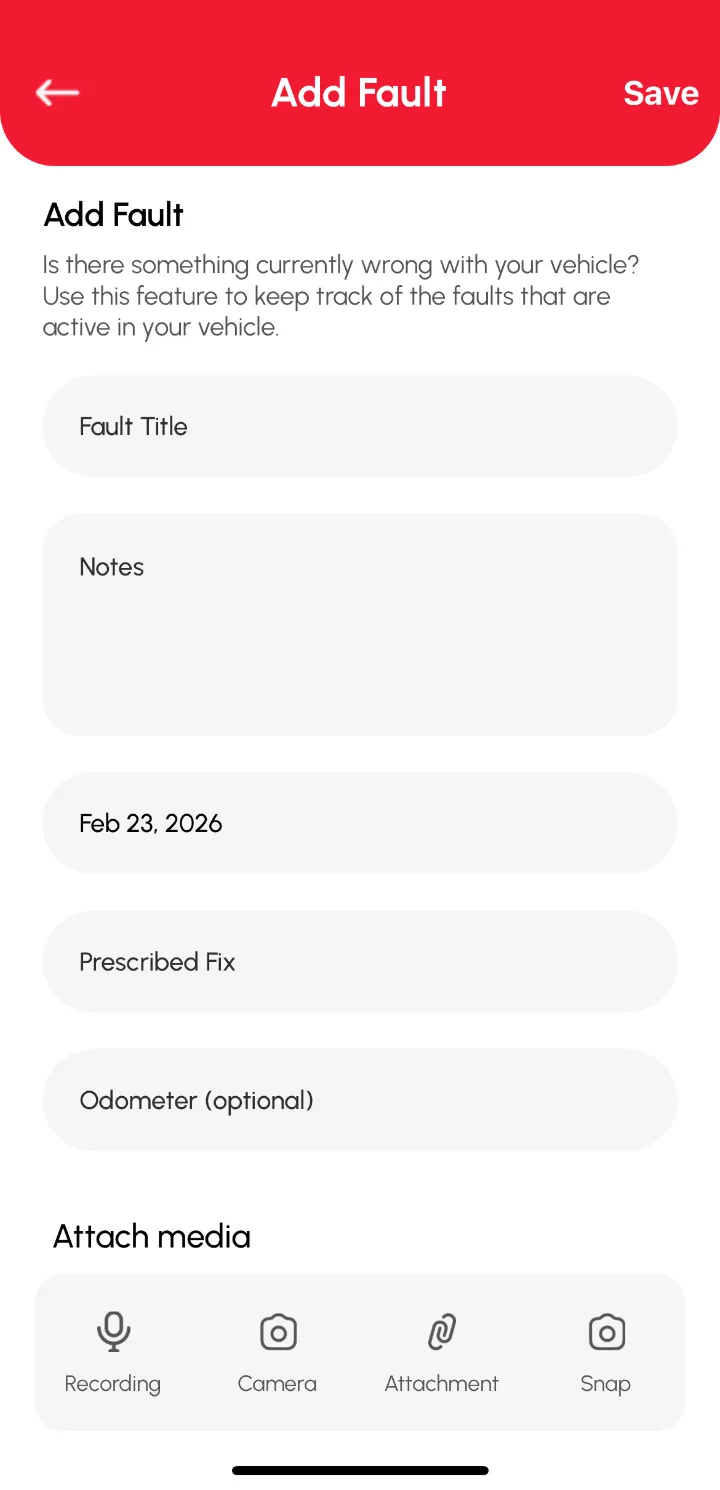
- Add a fault with the code in the title and the symptoms in the notes.
- After the repair, add a log entry with the work done, cost and receipt.
- Clear the fault so it moves to Cleared Faults.
Loggy is a free maintenance logbook app for iOS and Android. The free plan has unlimited vehicles, reminders, PDF export and vehicle transfer, and no ads.


Frequently asked questions
Can Loggy read my car's codes?
No. A scan tool reads them. You can then record the code in Loggy.
Does a code mean a part is faulty?
Not always. It tells you where the fault was detected. The cause needs checking.
Does clearing a code fix the problem?
No. It only wipes the stored code. If the cause is still there the code returns.