Fault: meaning and examples
A fault is a defect or problem found on a vehicle that needs fixing, from a dead interior light to a worn part. Keeping a list means small faults are not forgotten before the next service.
How it works
A fault is a defect found on a vehicle that needs attention. It might be minor, such as a dead interior light, or something to raise at the next service, such as a noise from a wheel.
Noting faults when they appear stops them being forgotten, and a list gives the mechanic a clear brief. Urgent safety problems should be fixed straight away, not parked on a list.
A fault list in use
Illustration: a rattle from the rear, a chipped windscreen and a sticking boot latch are added as three faults over a month. At the next service you hand the mechanic the list and tick each one off as it is fixed. The cleared faults stay on record.
How to track it in Loggy
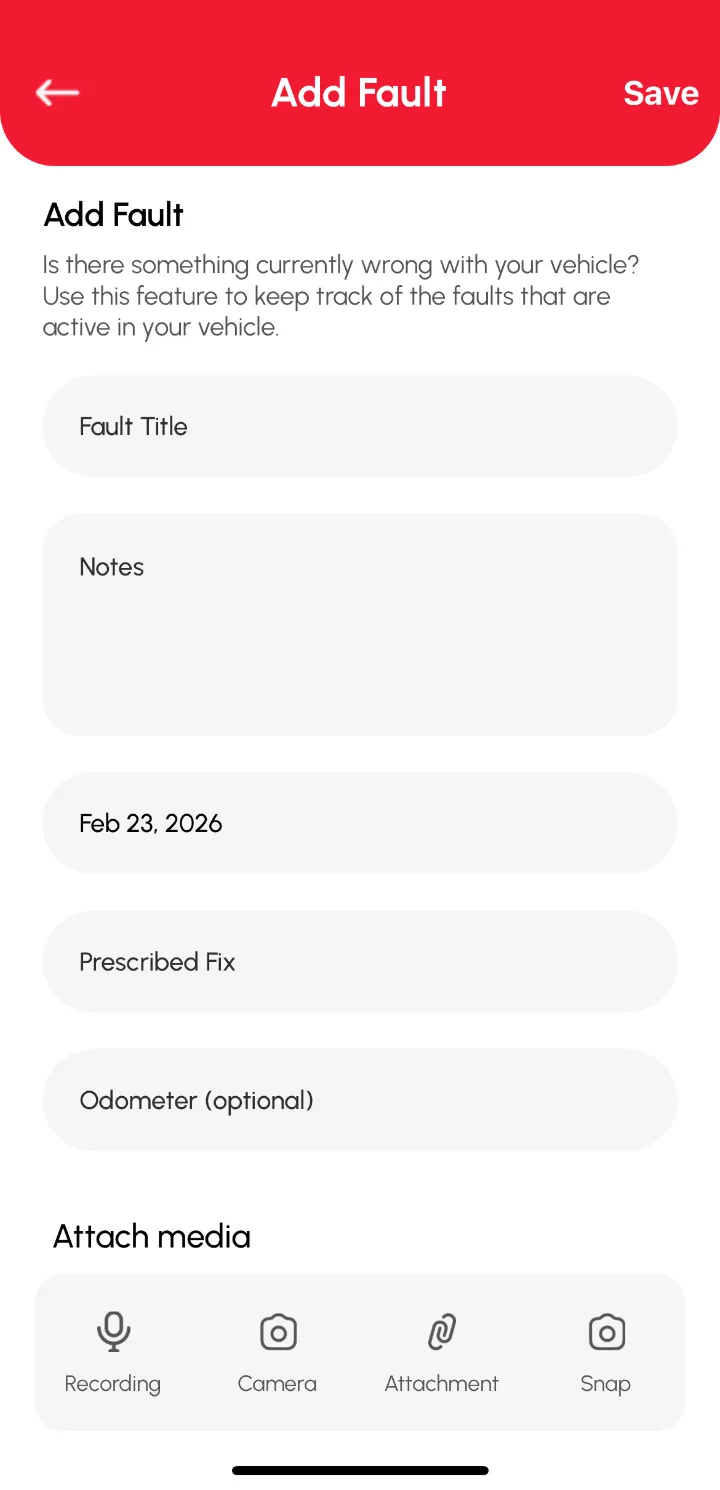
Add a fault from the Add button. It shows under Active Faults. When it is fixed, clear it and it moves to Cleared Faults, so a repeat problem has a record.
- Open the vehicle, tap Add, then Add Fault.
- Describe the fault and add photos, videos or a voice note.
- When it is fixed, clear it. It moves to Cleared Faults.
Loggy is a free maintenance logbook app for iOS and Android. The free plan has unlimited vehicles, reminders, PDF export and vehicle transfer, and no ads.


Frequently asked questions
What is the difference between a fault and a to-do?
A fault is something wrong. A to-do is a job you plan to do, such as fitting tyres.
Do cleared faults disappear?
No. They move to Cleared Faults so you have a record if the same problem returns.
Can a failed inspection item become a fault?
Yes. A failed item from an inspection can be turned into a fault.