Total cost of ownership: meaning and examples
Total cost of ownership (TCO) is the full cost of owning a vehicle or machine over the time you keep it: the purchase price plus running costs such as fuel, servicing, repairs, tyres, insurance and registration, minus what it sells for at the end.
How it works
Total cost of ownership adds up everything a vehicle or machine costs over the time you own it: the purchase price, fuel or power, servicing, repairs, tyres, insurance and registration, then subtracts what you get when you sell.
It is useful because the purchase price is only part of the story. A cheaper vehicle can cost more over time if it needs more repairs or loses value faster.
You can only work it out if the costs were recorded. A log that carries a cost on every service and repair gives you most of the running-cost side.
Adding it up
Illustration: a ute bought for 20,000, with 4,000 spent on servicing and repairs over five years and sold for 9,000, cost about 15,000 to own. The service and repair part comes straight from the log.
How to track it in Loggy
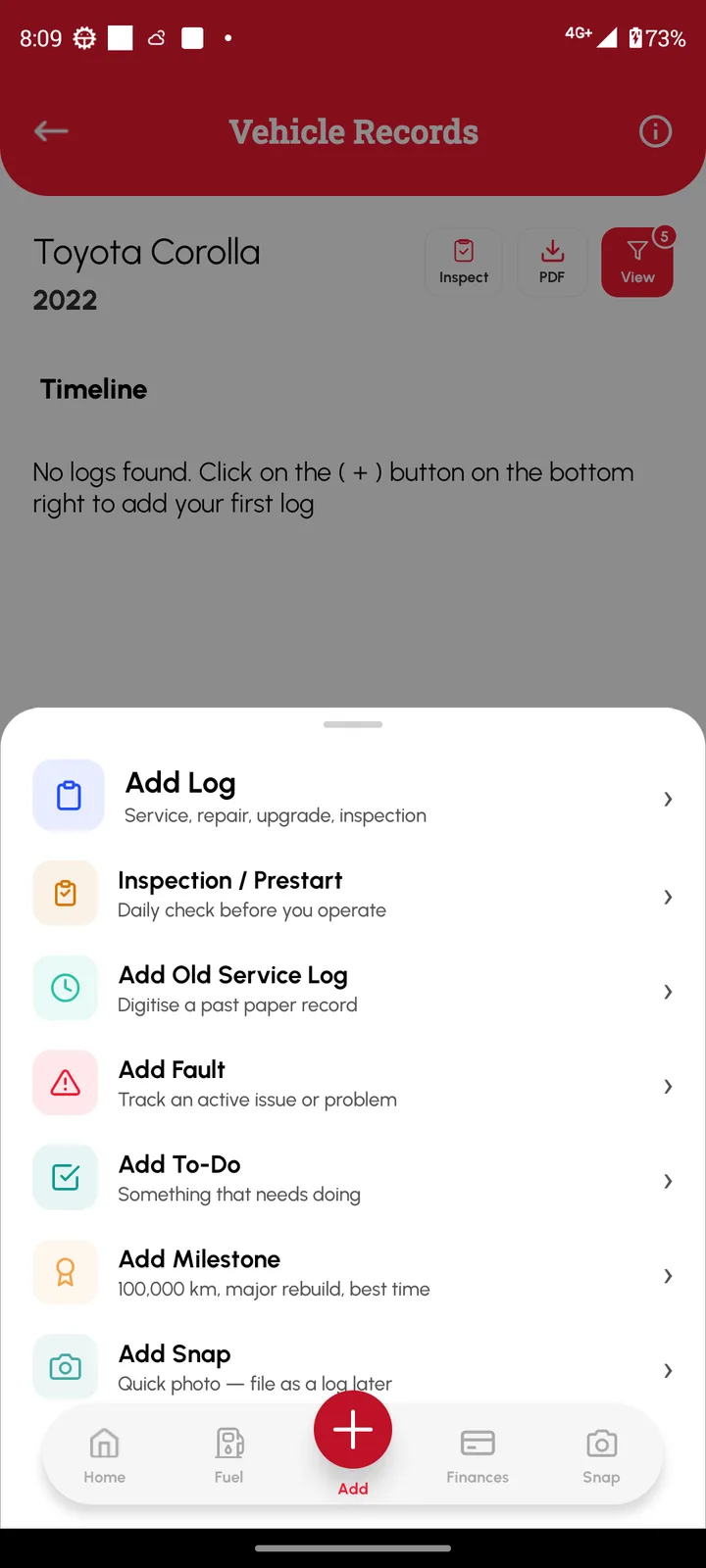
Every log entry can carry a cost, so your servicing and repair spend builds up on the vehicle's record. Export the history as a PDF to see it all in one place.
- Enter the cost on every log entry.
- Keep receipts and photos with the entries.
- Export the PDF report to see the history, with costs, in one place.
Loggy is a free maintenance logbook app for iOS and Android. The free plan has unlimited vehicles, reminders, PDF export and vehicle transfer, and no ads.


Frequently asked questions
Does Loggy calculate total cost of ownership?
Loggy records the cost on each entry and exports the history. The full calculation also needs purchase price, insurance and resale value, which you add.
What is included in TCO?
Purchase, running costs, servicing and repairs, insurance and registration, less resale value.
Why does it matter?
It lets you compare vehicles or decide when to replace one using the full cost, not just the price.