Work order: meaning and examples
A work order is a written request or record for one maintenance job. It says what needs doing, on which vehicle or machine, who will do it, when, and what parts and time it used.
How it works
A work order is the paper or digital note that turns a maintenance need into a job. It names the vehicle or machine, describes the work, says who will do it and by when, and later records the parts, time and cost.
Workshops and larger operations use them to keep track of who is doing what. For one owner or a small team, the same information still matters: what was done, when, by whom and what it cost.
A work order is also useful as a record. Once the job is closed, it shows what work was carried out.
What a work order captures
Illustration: "Service the Polaris Ranger. Engine oil and filter, check brake pads, grease fittings. Done by the workshop on 14 June at 102 hours. Parts and labour: invoice attached." The maker schedule behind that job is on our Polaris Ranger 1000 page.
How to track it in Loggy
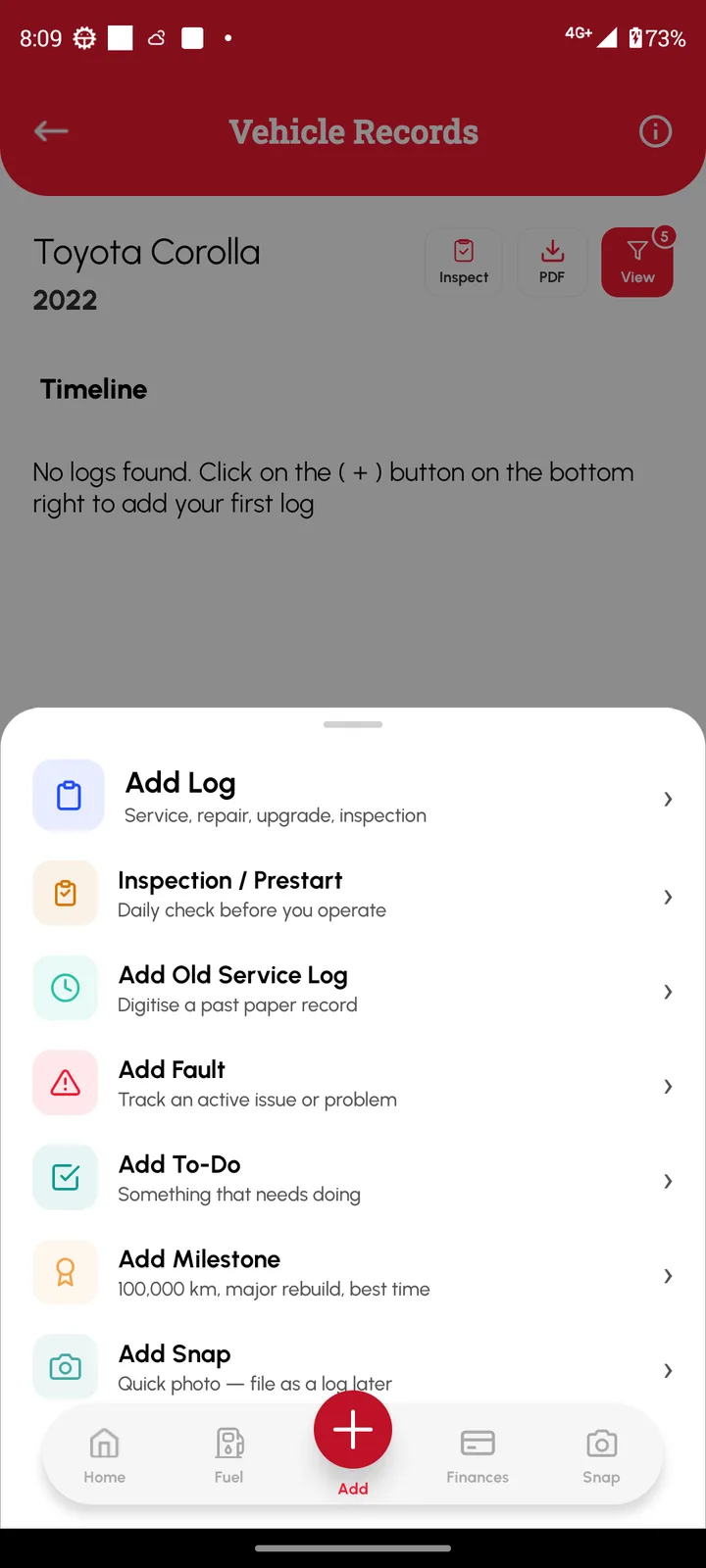
A log entry records the same things once the job is done: date, reading, what was done, cost, notes, photos and the invoice. A To Do covers a job you have planned but not done yet.
- For a job you are planning, add a To Do with the date.
- When it is done, add a log entry with the date, reading, work done, cost, notes and the invoice or photos.
- Clear the To Do so it does not stay open.
Loggy is a free maintenance logbook app for iOS and Android. The free plan has unlimited vehicles, reminders, PDF export and vehicle transfer, and no ads.


Frequently asked questions
Does Loggy have work orders?
Loggy uses log entries and To Dos. A To Do is the planned job, and a log entry is the finished record.
Who writes a work order?
Whoever asks for the job: an owner, a driver, a manager or a workshop.
Is a work order the same as an invoice?
No. A work order describes the job. An invoice asks for payment. Keep both with the log entry.